The Thing Isn’t the Problem
Jan 19, 2026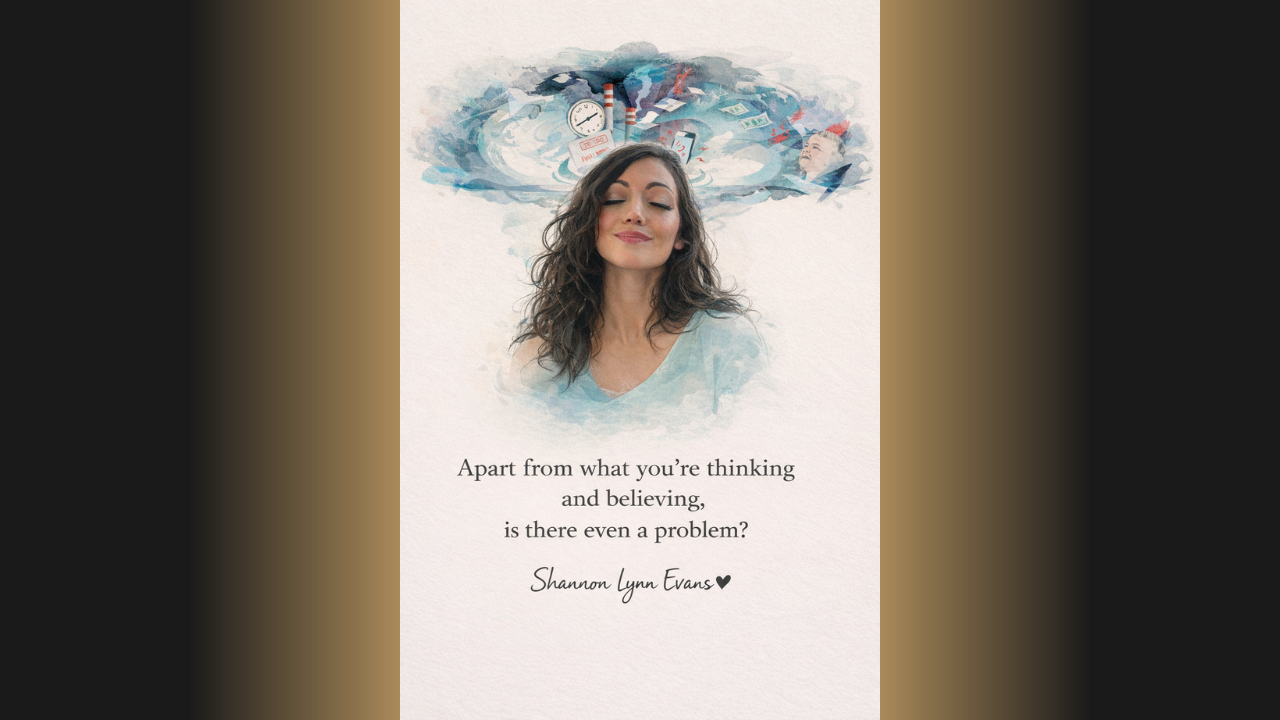
There’s a quiet moment that changes everything if you let it.
A message comes in.
A baby cries.
A plan falls apart.
Someone doesn’t respond the way you hoped.
Your body feels tired.
Your bank account looks a certain way.
You feel judged.
You feel behind.
And instantly, the mind starts doing what it does best: adding a story.
Before you know it, you’re not dealing with what’s happening.
You’re dealing with what you think it means.
That’s why this line is so freeing:
It’s our thoughts about a thing that cause our suffering, not the thing itself.
Pain vs. Suffering
Let’s be honest: life includes pain.
Bodies ache. Babies wake. People disappoint. Grief comes. Bills exist. Hormones shift. Plans change.
Pain is part of being alive.
But suffering… suffering is often optional.
Suffering happens when pain meets a mental overlay:
-
“This shouldn’t be happening.”
-
“I can’t handle this.”
-
“This means I’m failing.”
-
“This will never change.”
-
“They always do this.”
-
“Something is wrong with me.”
The moment you believe the thought, your nervous system responds as if the story is reality.
Not tomorrow. Now.
You can feel it in your chest, your jaw, your stomach, your breath.
The thing might be neutral or solvable.
But the story turns it into a crisis.
The “Second Arrow”
There’s an ancient teaching that describes this perfectly: the first arrow is what happens. The second arrow is what we add.
The first arrow: your baby wakes up again.
The second arrow: “I’m never going to sleep again. I’m doing this wrong. I’m trapped.”
The first arrow: someone makes a comment.
The second arrow: “They don’t respect me. People always think I’m too much. I shouldn’t have said that.”
The first arrow: money feels tight.
The second arrow: “I’m behind. I’ll never figure it out. I’m not safe.”
The suffering isn’t always the event.
It’s the interpretation.
Why We Suffer So Much in Our Minds
Your mind is not trying to ruin your life. It’s trying to protect you.
The mind’s job is to:
-
predict
-
prevent
-
control
-
prepare
But here’s the catch:
Most of what the mind is preparing for isn’t happening.
It’s happening in imagination.
We suffer in the “nano-future," that tiny mental jump ahead where we rehearse the worst case scenario and call it responsibility.
And because the body can’t tell the difference between a real threat and an imagined one, you start feeling anxiety in a moment that may not actually contain danger.
So you’re exhausted… before you even do anything.
You’re overwhelmed… before the problem exists.
You’re bracing… when life is simply asking you to be here.
A Simple Practice: Separate the Thing From the Thought
Here’s a grounding inquiry:
What is the “thing," in plain, neutral language?
Not the story. Not the meaning. Just the facts.
Examples:
-
“The baby is crying.”
(Not: “He’s inconsolable and I’m failing.”)
-
“The email hasn’t been answered.”
(Not: “They’re ignoring me because I’m not important.”)
-
“I have $2300 in my account.”
(Not: “I’m unsafe and behind and irresponsible.”)
-
“I feel tension in my back.”
(Not: “My body is broken and I’ll never feel strong again.”)
Now ask:
Apart from what I’m thinking and believing, is there even a problem right now?
This isn’t denial. It’s discernment.
Sometimes the answer is:
-
“Yes. There’s a practical action needed.”
Great. Do that.
And sometimes the answer is:
-
“No. There’s just discomfort and a story.”
When you see that, you stop wrestling with reality.
The Freedom of “Just This”
There’s a kind of peace that comes when you reduce life to what’s actually happening.
Just this breath.
Just this sound.
Just this cry.
Just this moment.
Not the meaning.
Not the future.
Not the identity narrative.
Just this.
And what you often discover is:
The moment is workable.
The moment is survivable.
The moment is not your enemy.
It’s the mind’s argument with the moment that creates suffering.
But What About Real Problems?
Let’s be grounded: some circumstances are truly hard.
This is not about pretending everything is fine.
It’s about refusing to add extra suffering to the hard thing.
Even in real hardship, there are two different experiences:
-
Hard thing + presence
-
Hard thing + story + fear + resistance + identity collapse
Same circumstance. Completely different inner world.
Presence doesn’t erase challenges.
It removes the unnecessary layers that drain you before you begin.
The Most Important Shift
When you realize suffering is thought-made, you stop waiting for life to change before you feel okay.
You stop bargaining with reality.
You stop trying to control everything just to feel safe.
You start asking:
-
“What’s true right now?”
-
“What’s needed next?”
-
“What story am I believing?”
-
“Can I be with this moment without adding fear to it?”
That’s power.
Not loud power.
Quiet power.
The kind that changes your whole life from the inside.
A Closing Invitation
If you’re in a season of overwhelm, try this today.
When you feel the tightness rise, pause and name:
The thing: ____________________
The thought: ___________________
Then ask:
If I didn’t believe this thought for 10 seconds… what remains?
Often what remains is not catastrophe.
It’s breath.
It’s capacity.
It’s you.
And from there, you can respond wisely, without suffering twice.
Because the truth is simple:
It’s our thoughts about a thing that cause our suffering, not the thing itself.
And that means relief is closer than you think.
Stay connected with news and updates!
Join our mailing list to receive the latest news and updates from our team.
Don't worry, your information will not be shared.
We hate SPAM. We will never sell your information, for any reason.